Traceable project basis
Project identity, applicable equipment scope and the relevant engineering context must be internally traceable before anything is described as a completed reference.
Illustrative engineering architectures
These reference architectures translate common industrial wastewater questions into visible equipment hand-offs. They are not customer cases, final process designs or performance promises; every route must be adapted to the actual wastewater, site and project scope.
From catalogue to process context
Each blueprint starts with a sector-specific engineering question and then maps a possible chain from influent protection to separated-solids transfer. Open questions are made explicit rather than filled with invented site data.
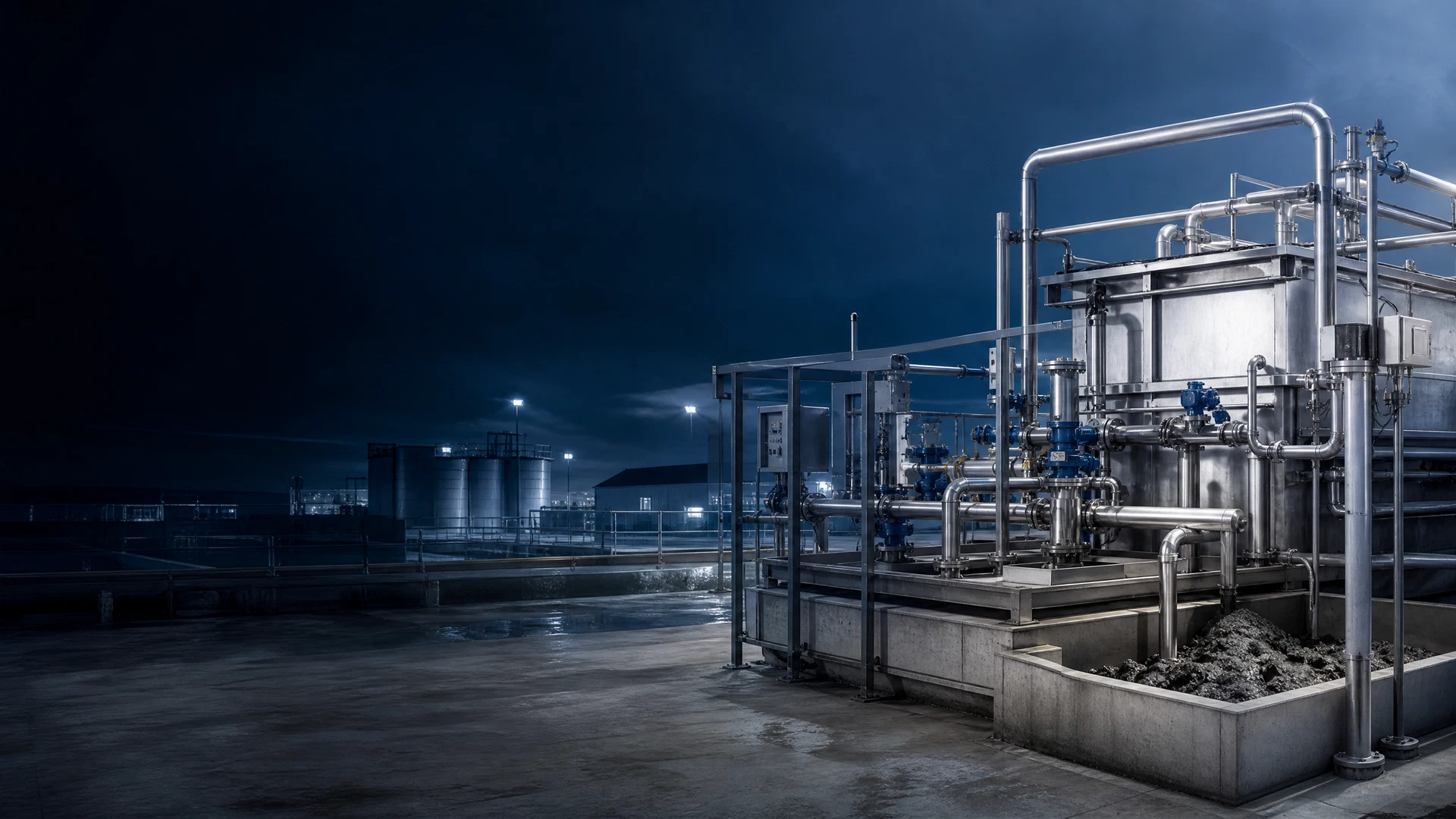 01
01Illustrative process architecture
A non-customer reference architecture for organizing screening, flow balancing, chemical preparation, flotation and sludge handling questions in food and beverage wastewater projects.
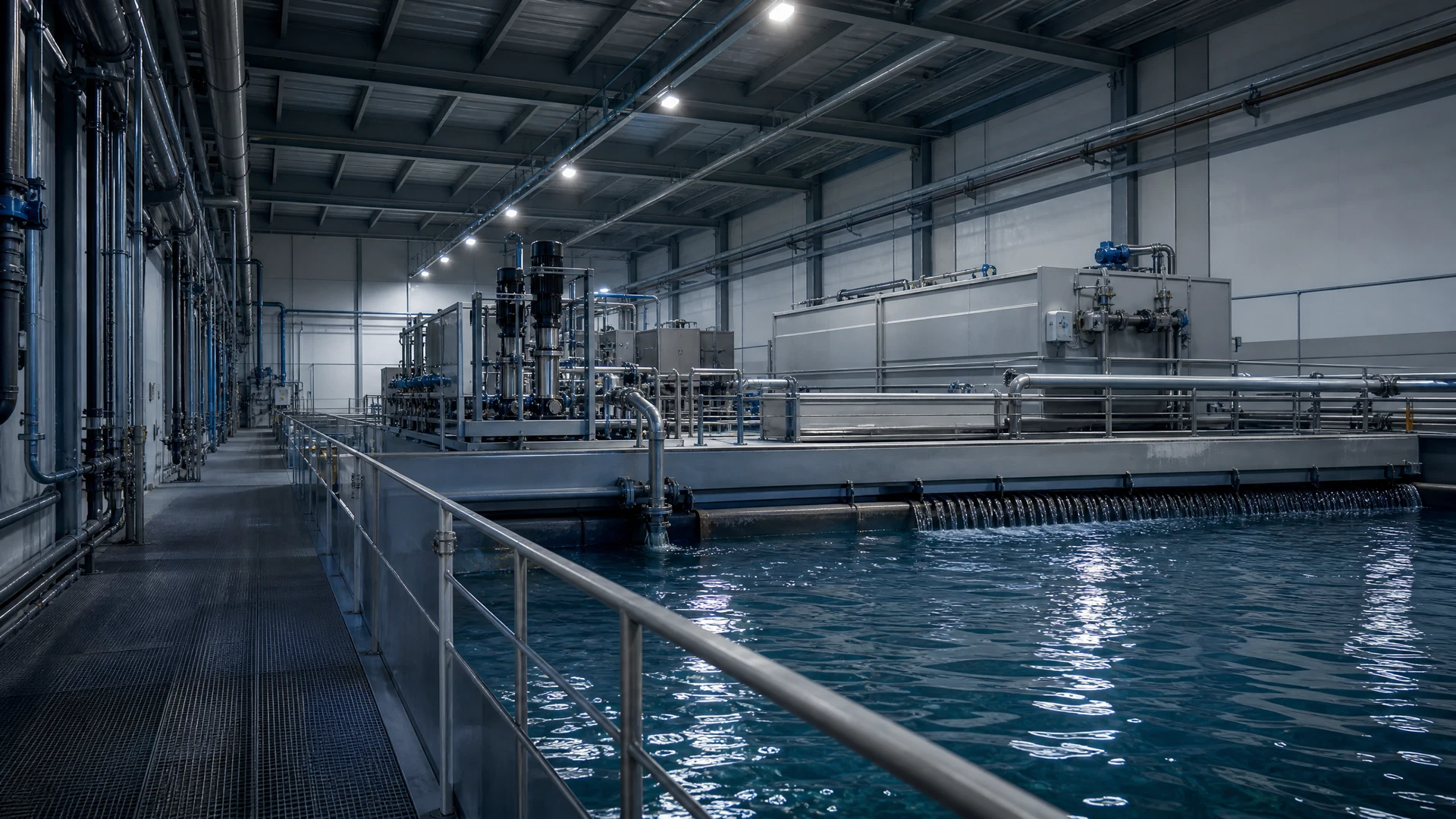 02
02Illustrative process architecture
A non-customer reference architecture for reviewing fibre screening, equalization, chemical conditioning, flotation and solids handling in variable textile and dyeing wastewater duties.
 03
03Illustrative process architecture
A non-customer reference architecture for connecting screening, separation, dewatering and enclosed conveyance where fibres and solids routes shape wastewater plant operation.
 04
04Illustrative process architecture
A non-customer reference architecture for structuring equipment, materials, containment, controls and solids-handling questions in chemical and petrochemical wastewater projects.
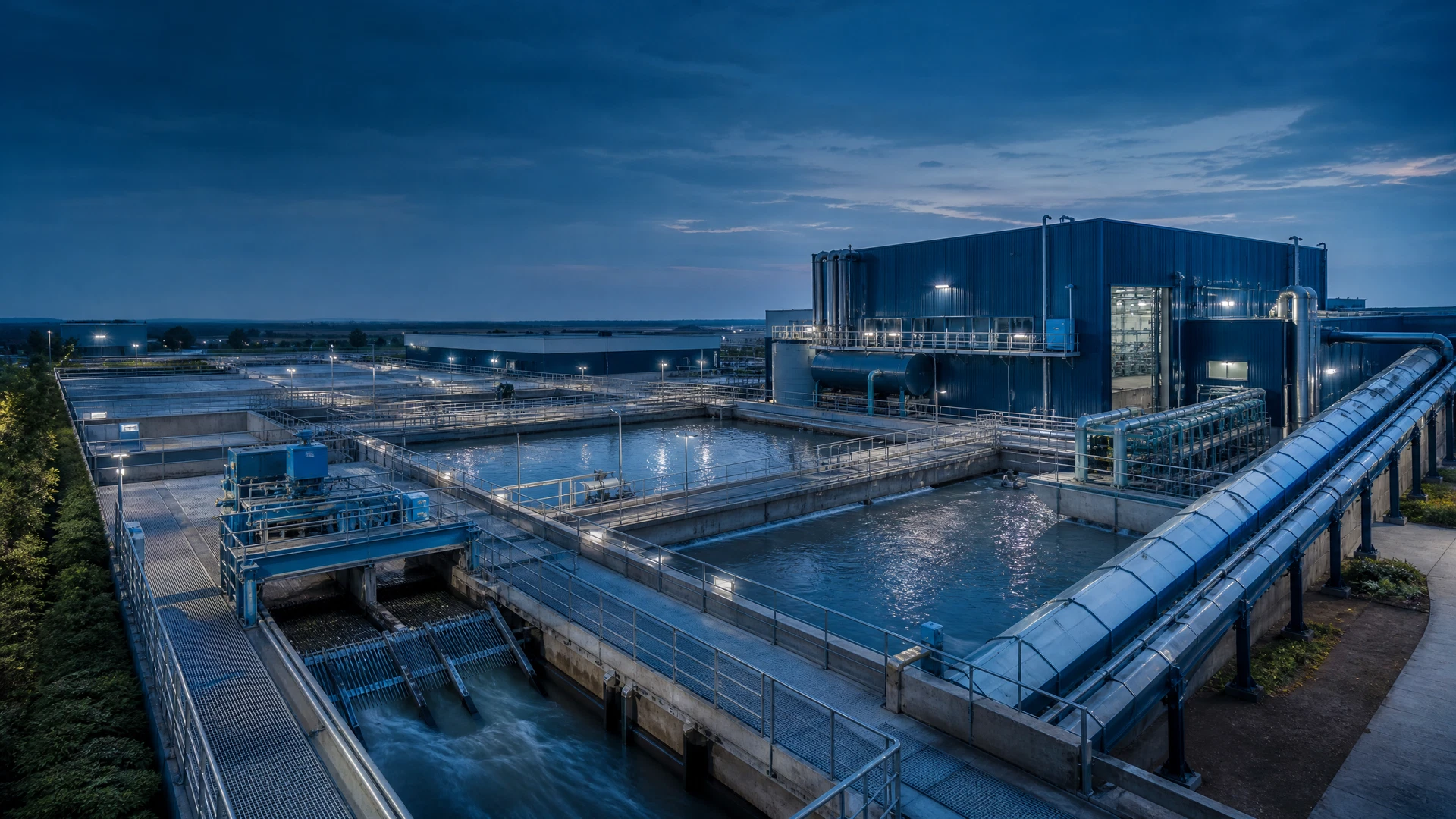 05
05Illustrative process architecture
A non-customer reference architecture for centralized facilities connecting inlet screening, chemical dosing, flotation, dewatering and cake management under variable contributor loads.
Important scope note
Shengmai will only publish customer names, site photographs, results and performance evidence when they are real, authorized and traceable. Until then, the blueprints provide an honest way to show how available product modules can be discussed as a connected industrial wastewater line.
Project evidence publication standard
This policy prevents anonymous illustrations, generic industry images or unverified results from being presented as customer proof. It also gives prospective clients a clear standard for evaluating future reference material.
Project identity, applicable equipment scope and the relevant engineering context must be internally traceable before anything is described as a completed reference.
Customer name, site photography, project details or results are published only where disclosure is authorized and the scope of that authorization is clear.
Any result must state its measurement context, process boundary and project conditions. Broad catalogue claims are not relabelled as site outcomes.