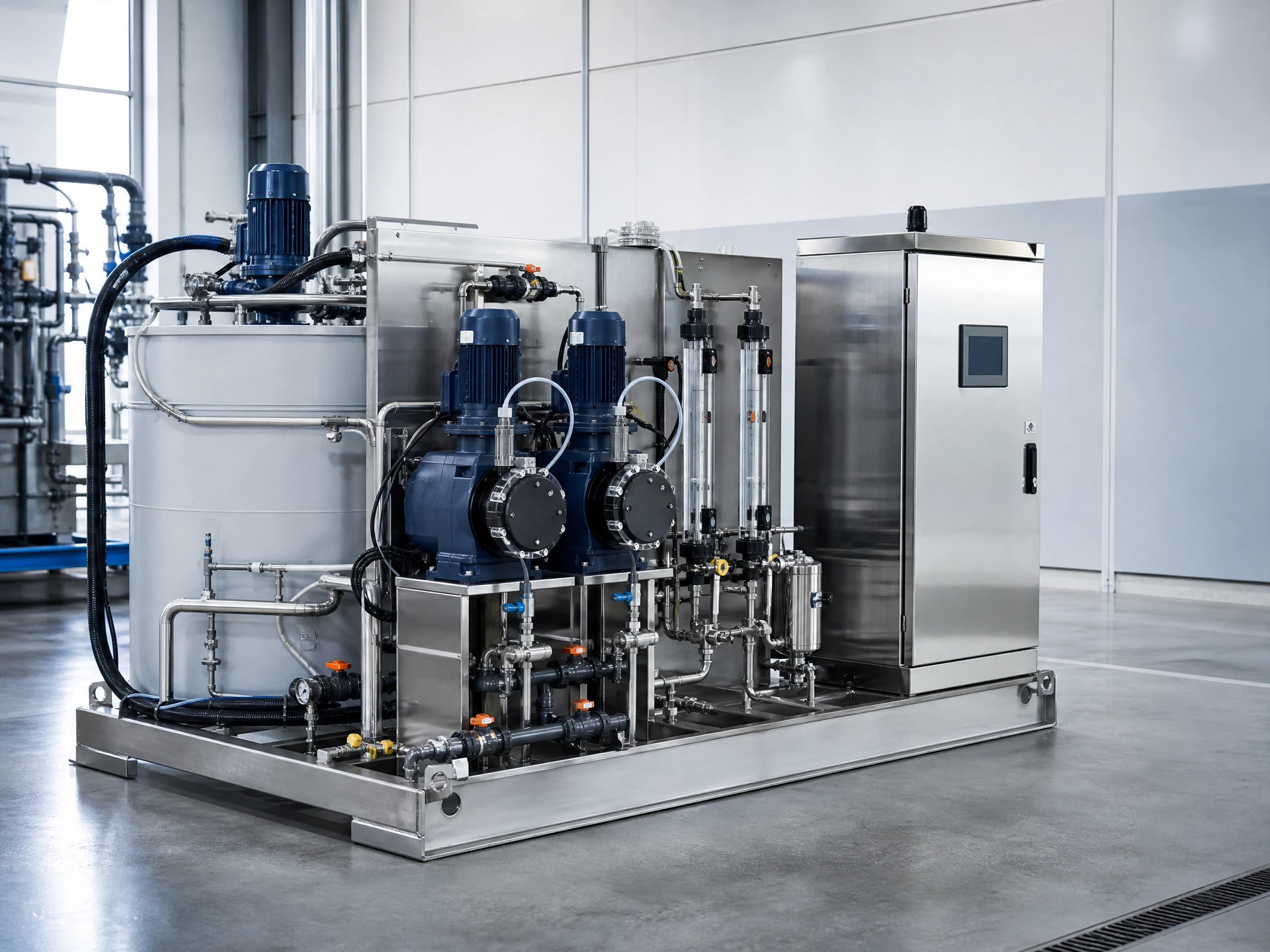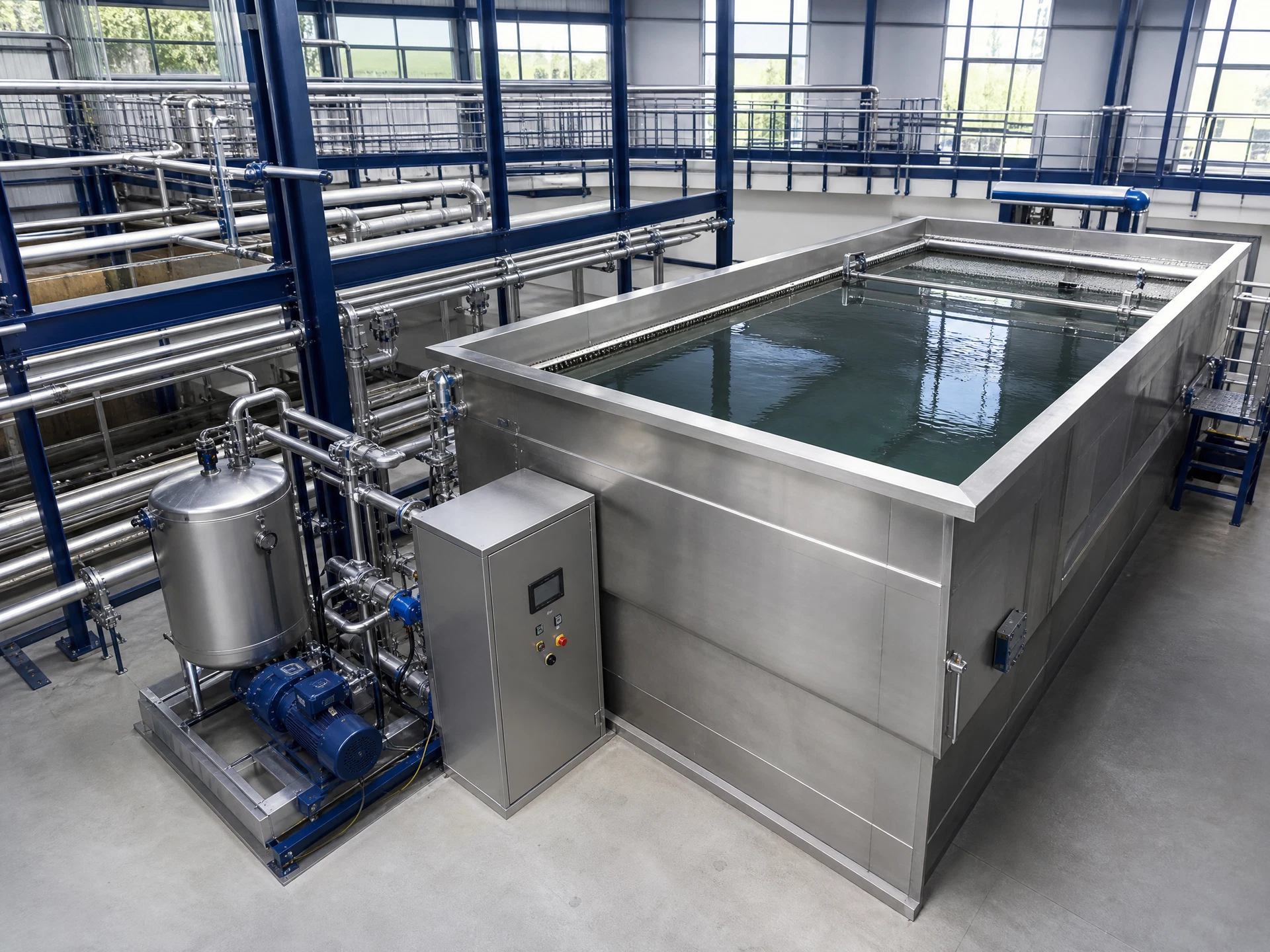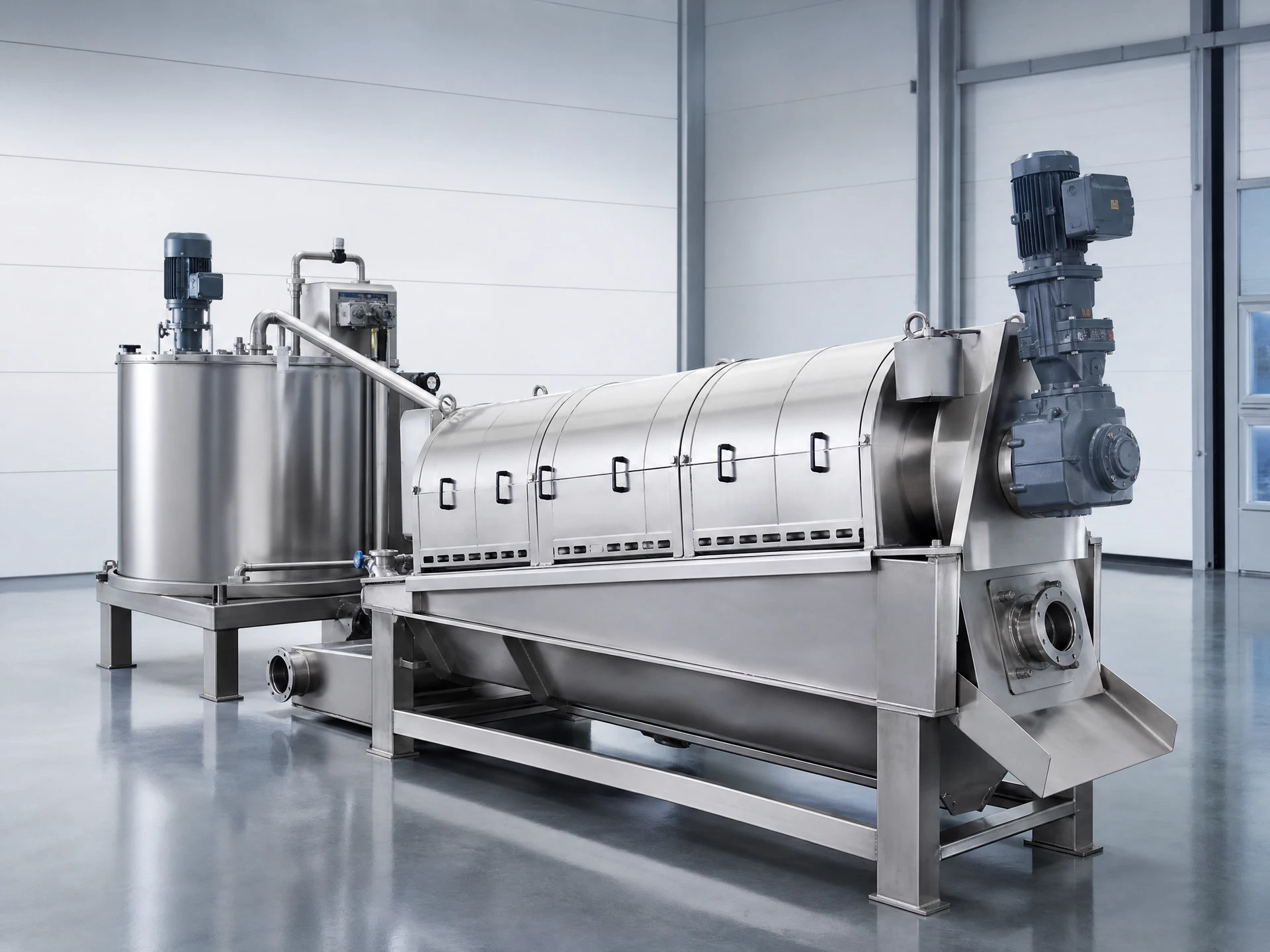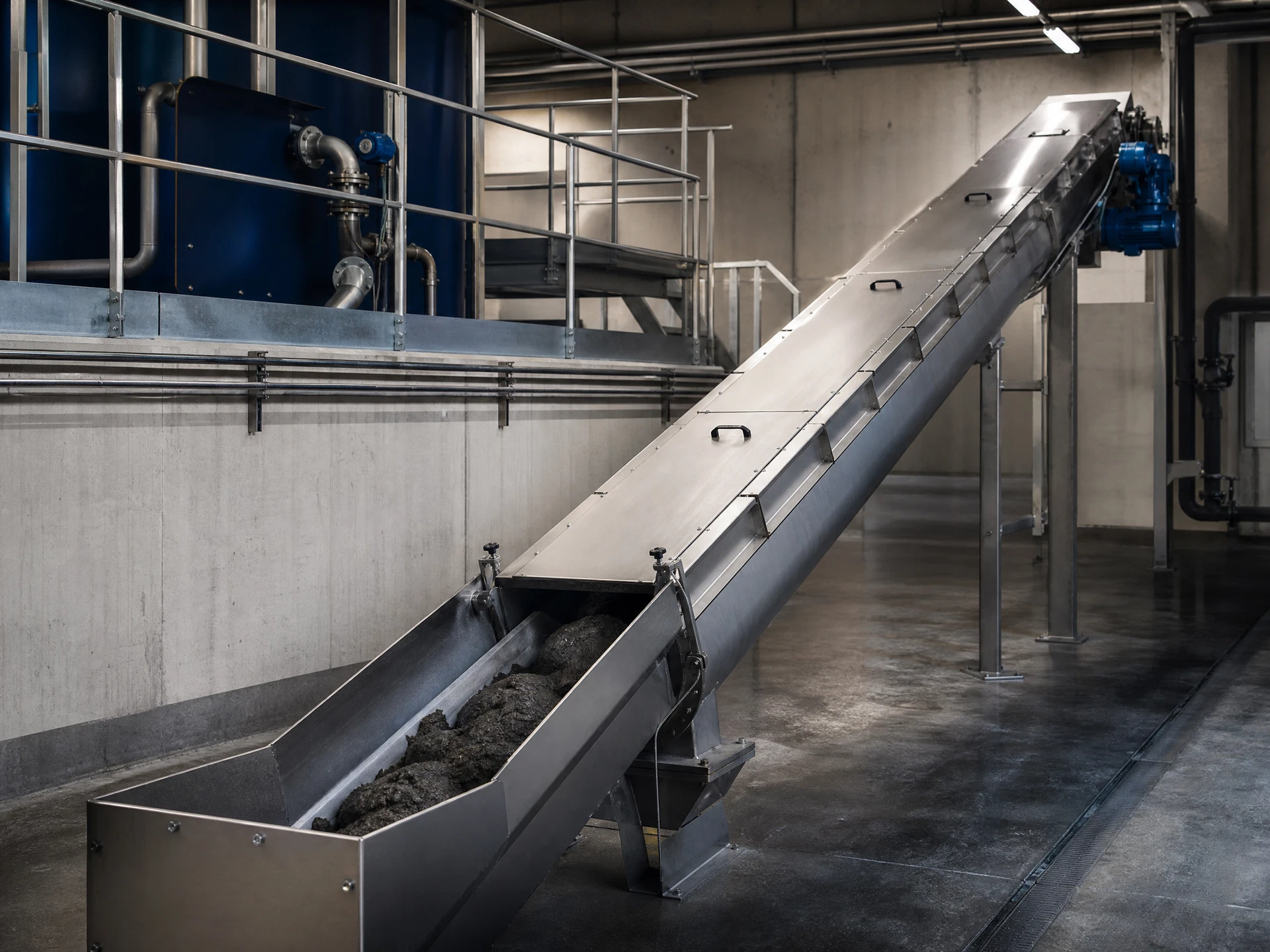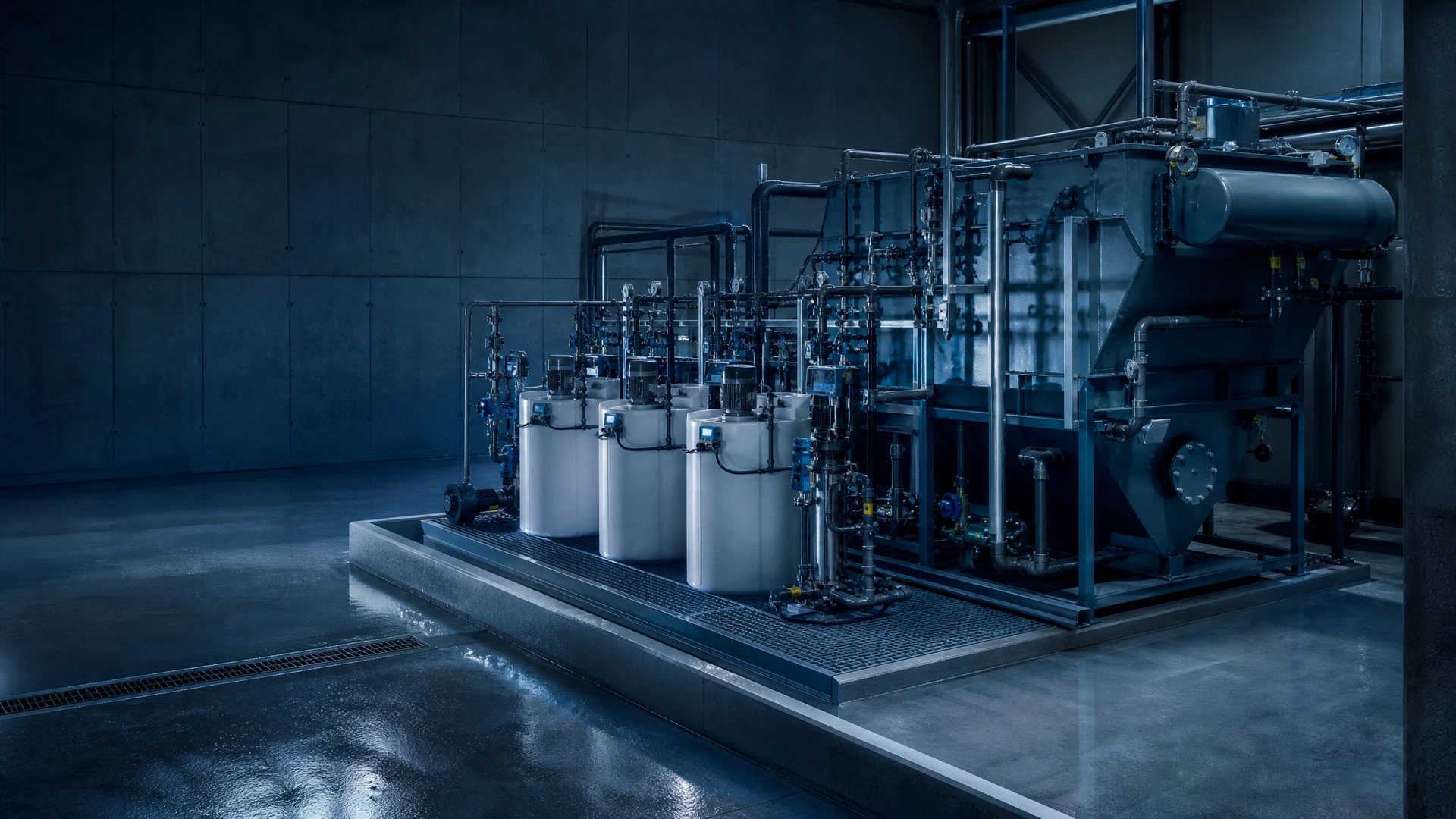
This is an illustrative engineering architecture. It does not represent a named customer, a completed Shengmai project, a guaranteed process result or a final scope of supply.
Make wastewater chemistry the first scope boundary
Chemical and petrochemical project discussions need a clear description of known constituents, pH, temperature, oil, solids, corrosion potential and safety constraints. This architecture is illustrative only; it does not imply suitability of a specific material, instrument or process module without project confirmation.
Review containment, access and utilities with the equipment
Chemical preparation, separation and solids handling need to be considered with the available site containment, ventilation, wash-down, drains, electrical environment and maintenance route. These details are often as important as the nominal product selection.
Separate reference information from validated performance
Catalogue series can support early conversation, while treatment expectations require sample data, chemical response, design criteria and an agreed measurement method. A disciplined proposal distinguishes each of these clearly.
Close the scope through technical clarification
The RFQ should identify process boundaries, material-contact expectations, existing treatment, target outcome, safety conditions, utilities, layout and the selected route for separated solids. Unknown items can be recorded as clarification points rather than assumed.