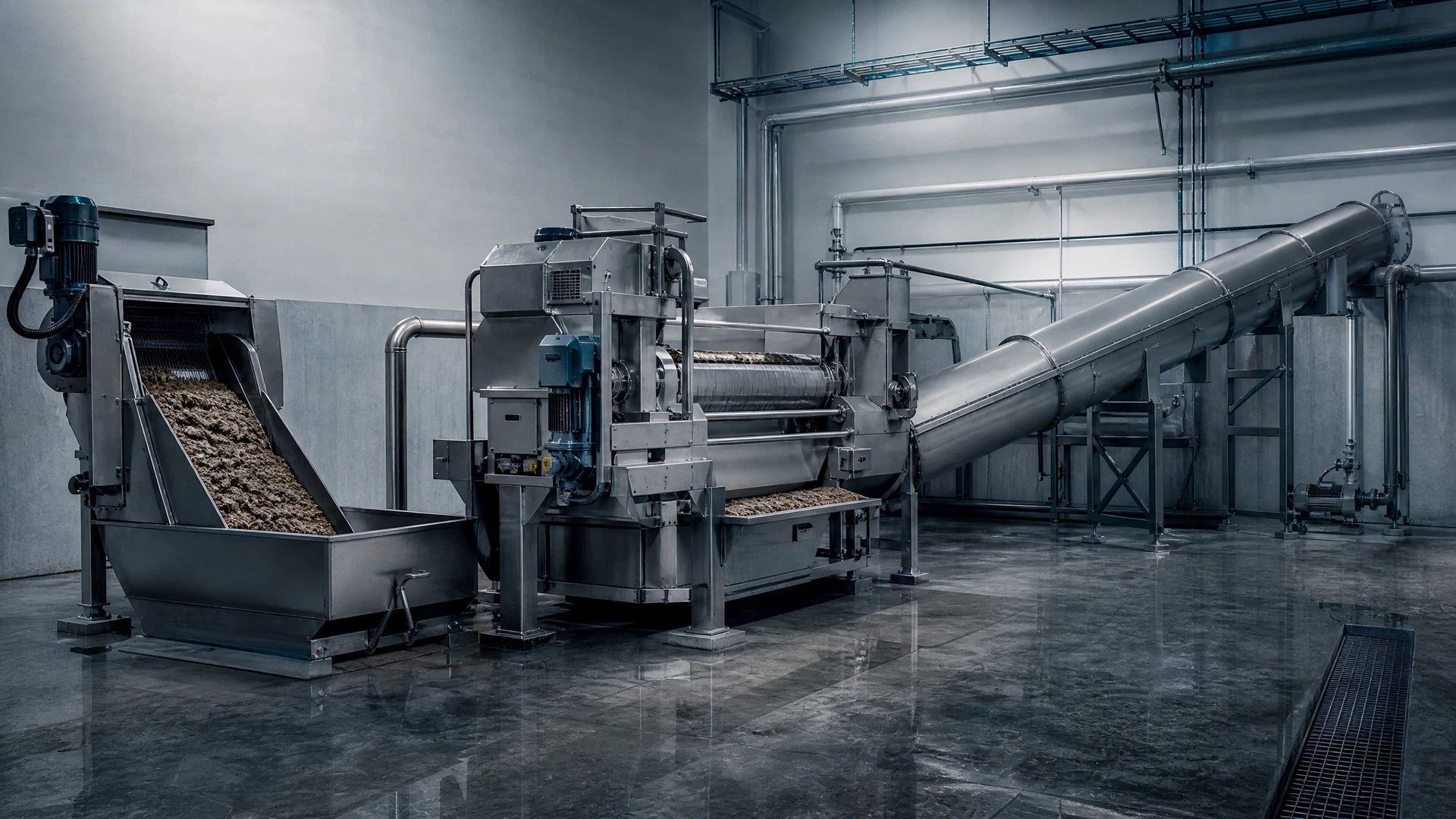
This is an illustrative engineering architecture. It does not represent a named customer, a completed Shengmai project, a guaranteed process result or a final scope of supply.
Design around fibre behaviour and transfer continuity
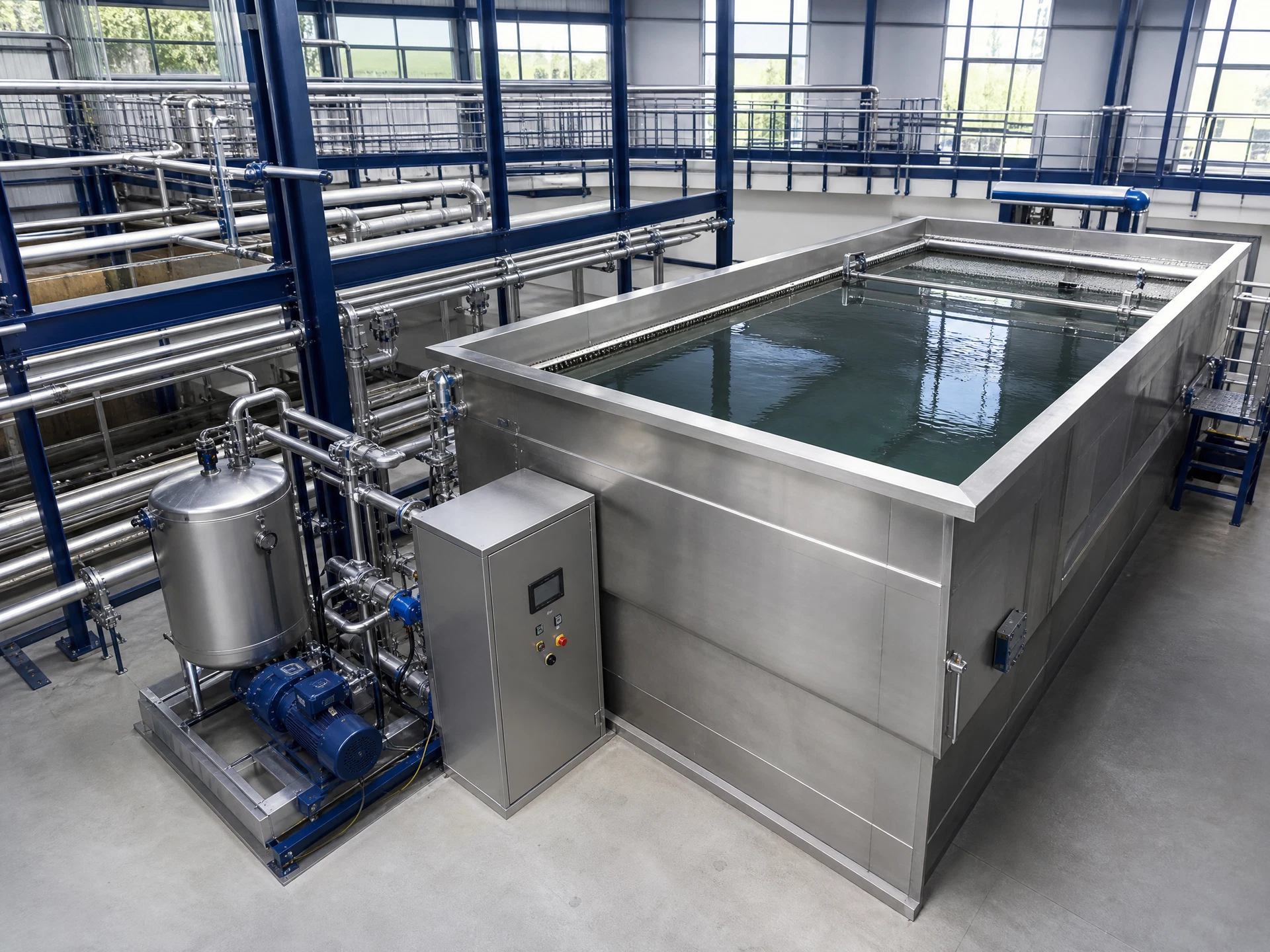
Pulp and paper streams may contain fibres, fines and debris that influence both the water line and the way solids move through a plant. This architecture provides a review framework; final screening, separation and transfer decisions must follow the actual material and site conditions.
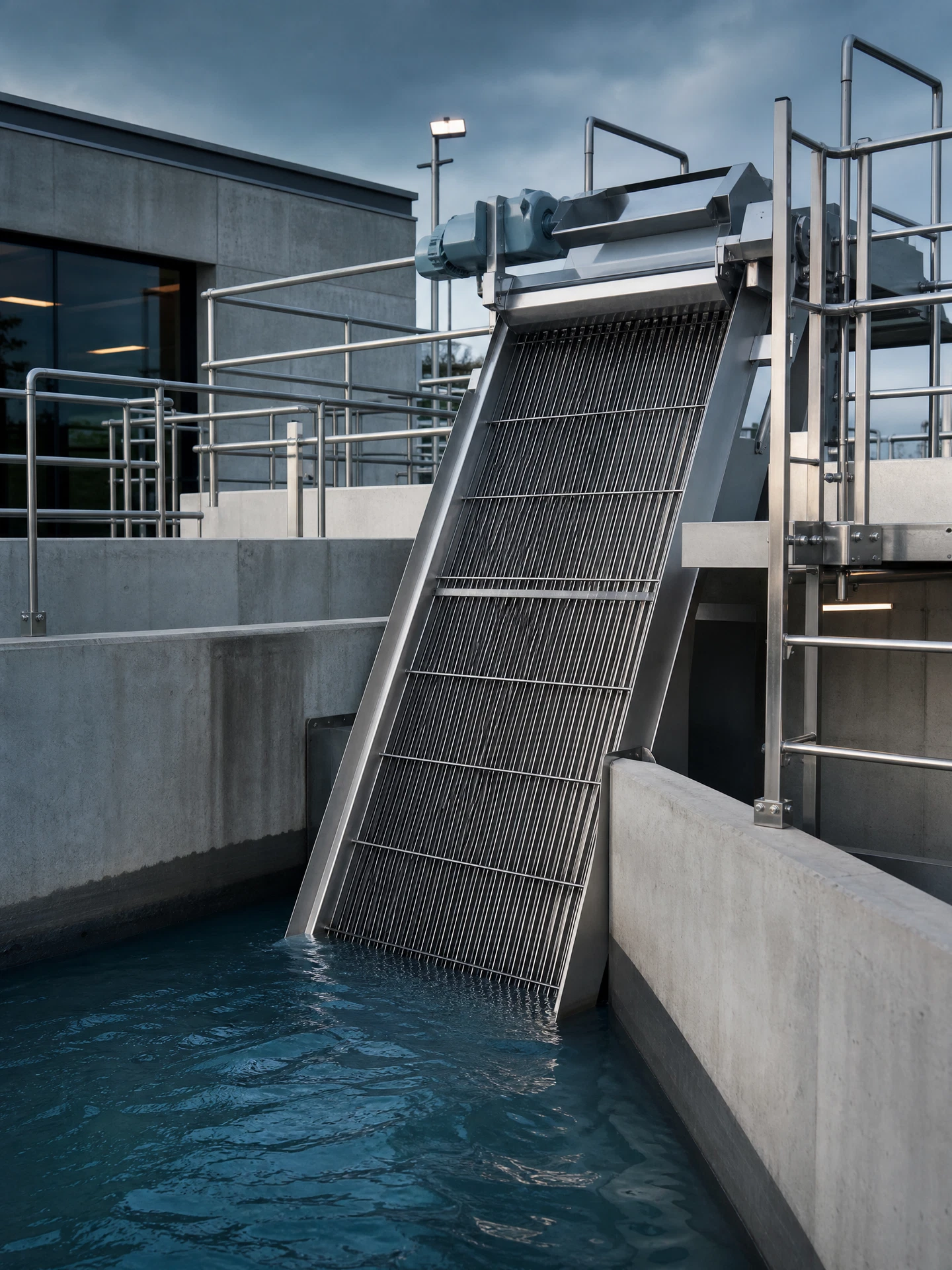
Use screening to protect the line and define the screenings route
Channel data, screen opening, fibrous material and discharge containment should be reviewed together. The goal is not only to retain material, but also to make its onward handling and access route workable during normal and upset conditions.
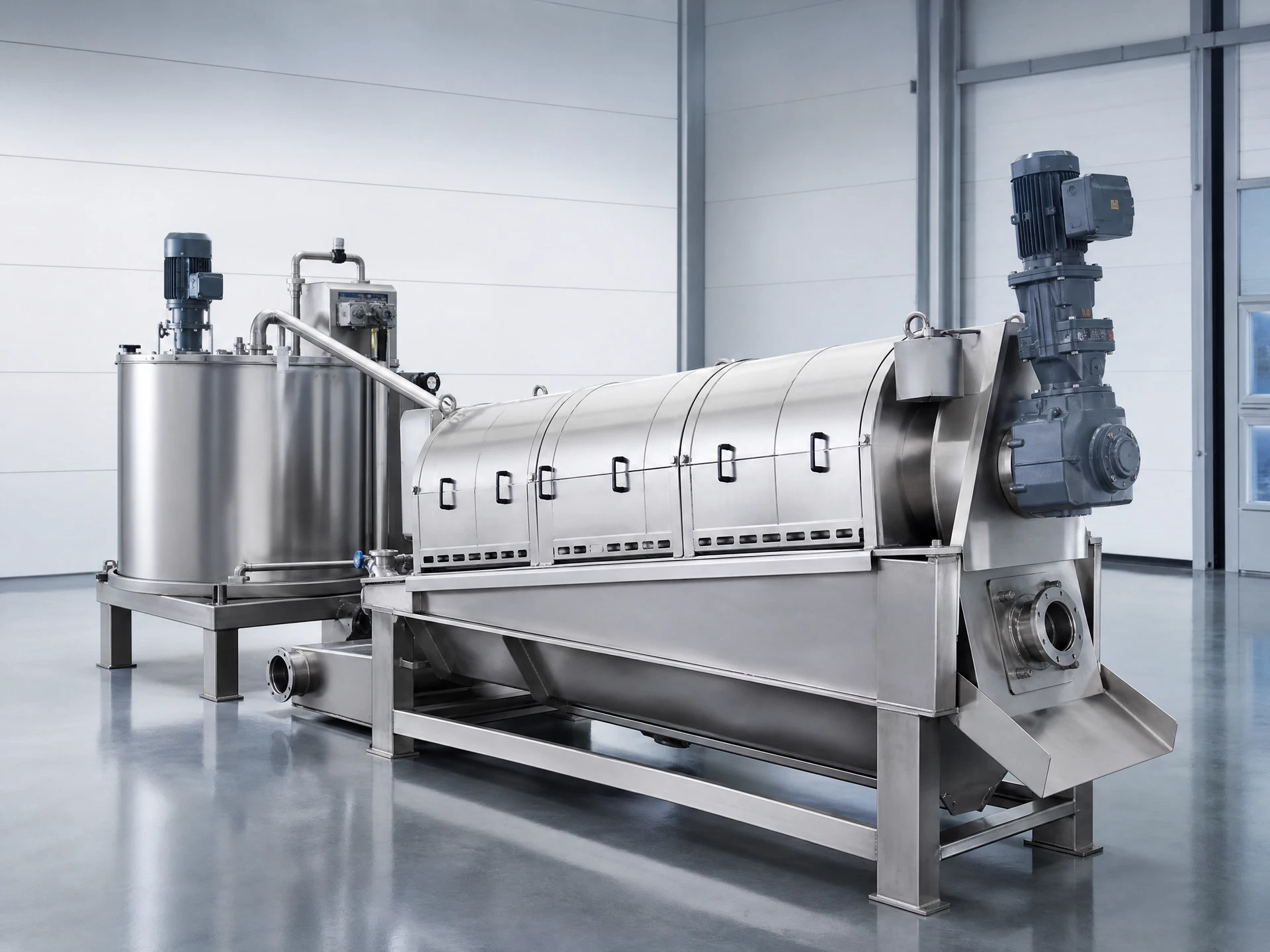
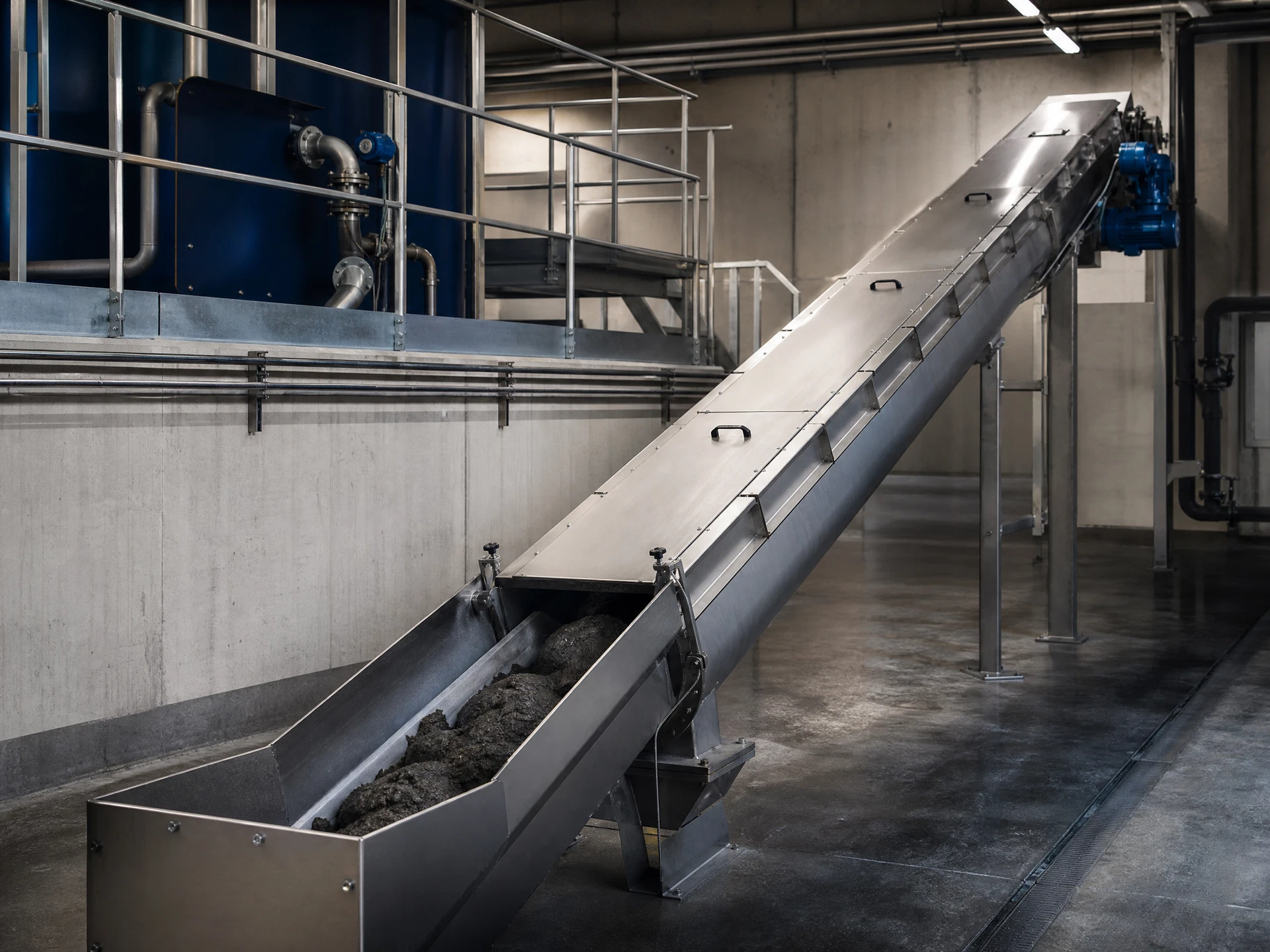
Connect dewatering to a contained solids path
After collection and conditioning, dewatered material may need a controlled transition to a conveyor, hopper or other receiving point. Route length, incline, material condition, access and equipment interlocks should be visible in the engineering review.
Keep performance claims tied to the real stream
Fibre and solids behaviour varies materially by operation. Site data, samples and the desired outcome should guide selection and any project-specific validation rather than a broad application label or theoretical capacity alone.