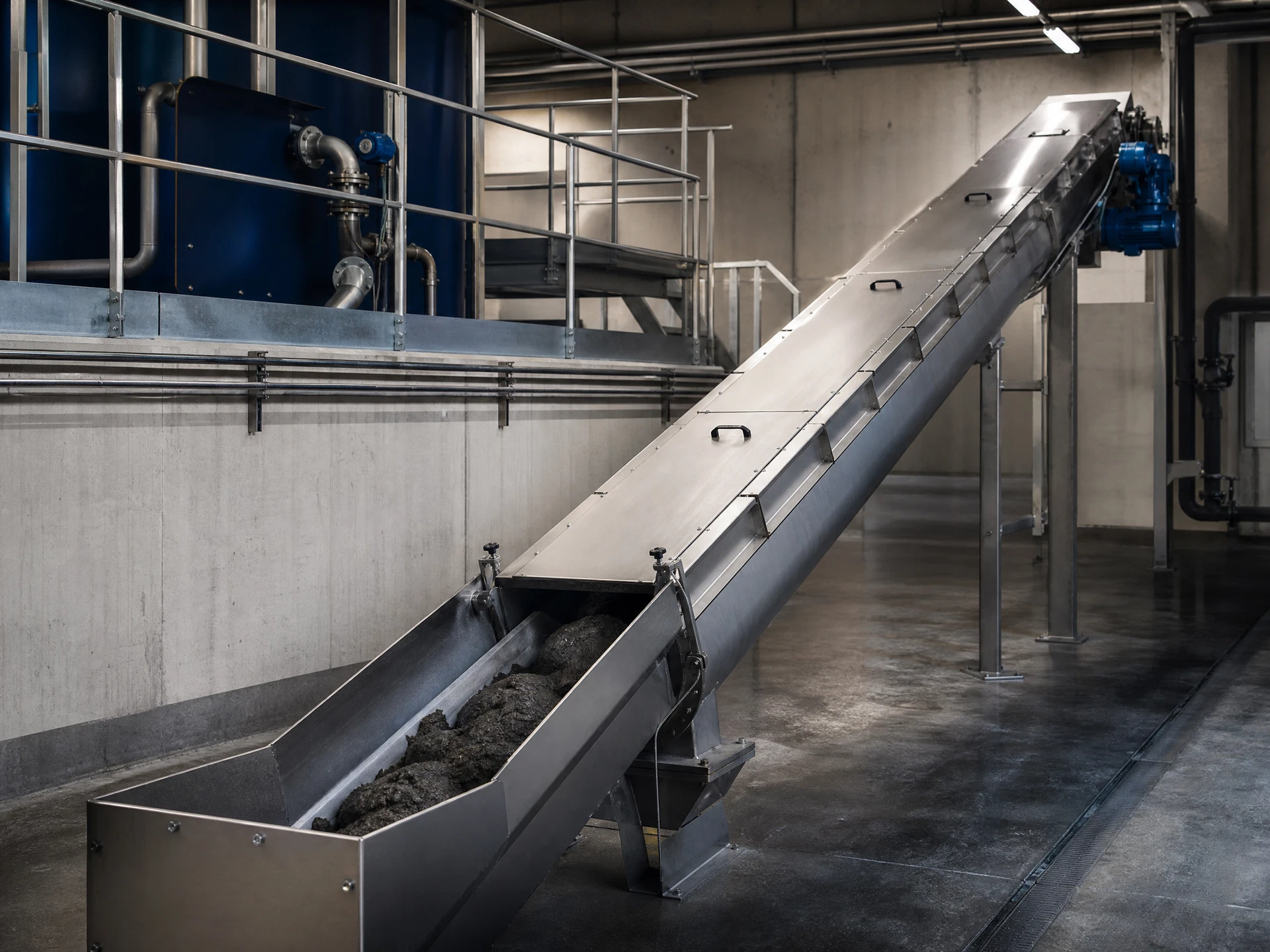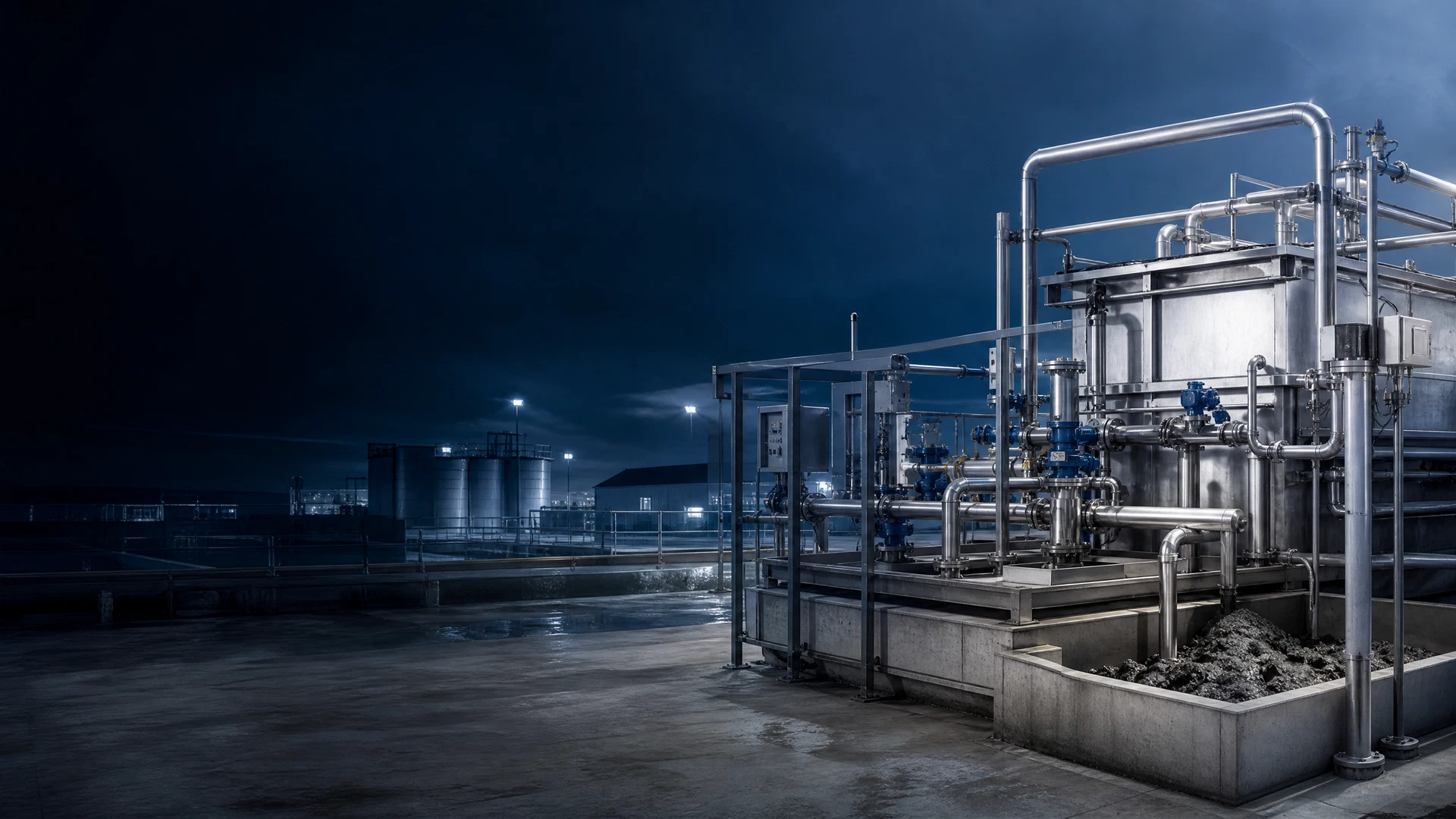
This is an illustrative engineering architecture. It does not represent a named customer, a completed Shengmai project, a guaranteed process result or a final scope of supply.
Use the production schedule to frame the water profile
Food and beverage sites may see changing production, wash-down, fats, fine suspended matter and cleaning chemistry. This architecture is a way to organize an early review; it does not assume a universal wastewater composition or treatment result. Measured data and the project objective remain the design basis.
Protect downstream separation with defined front-end conditions
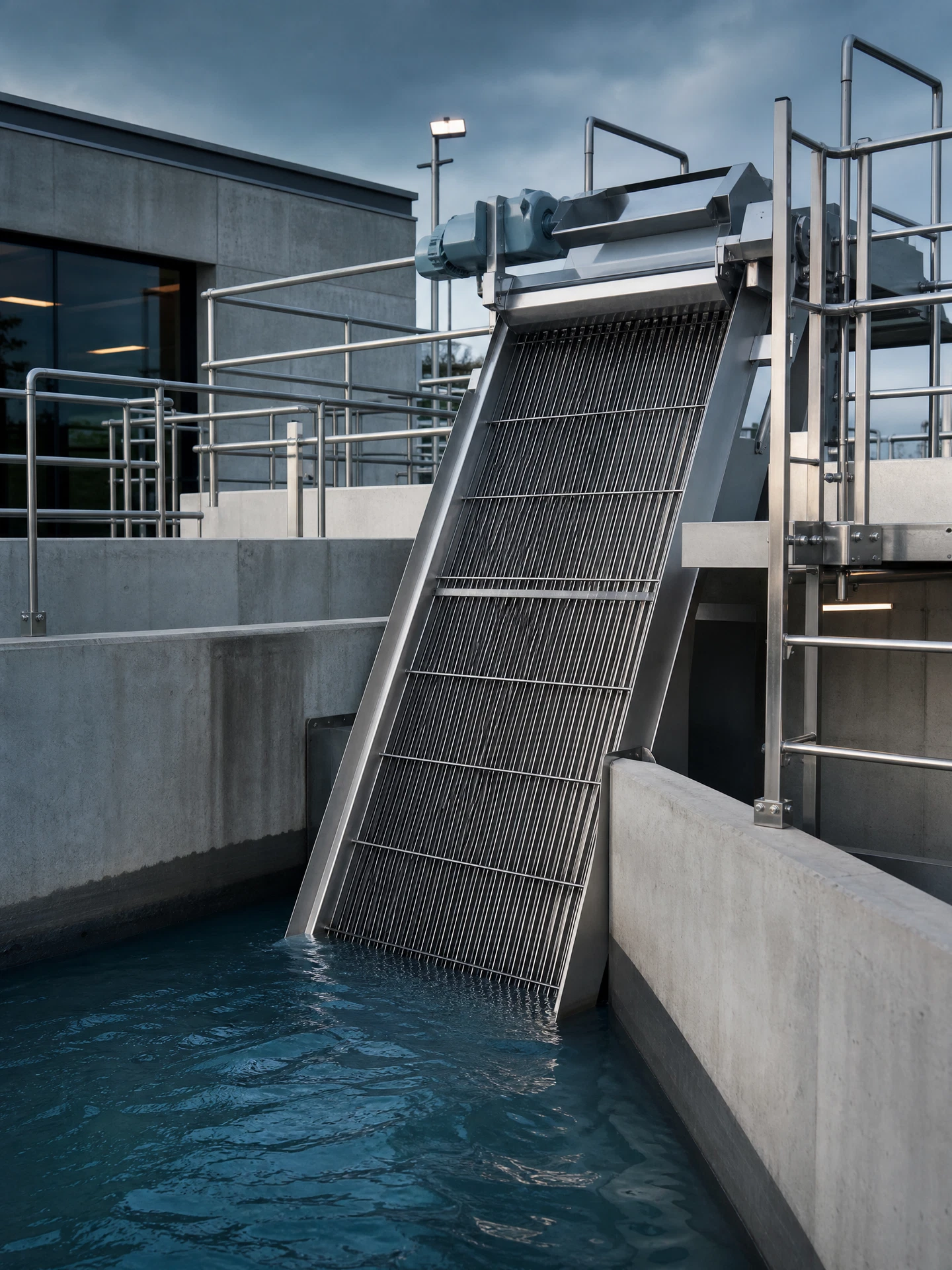
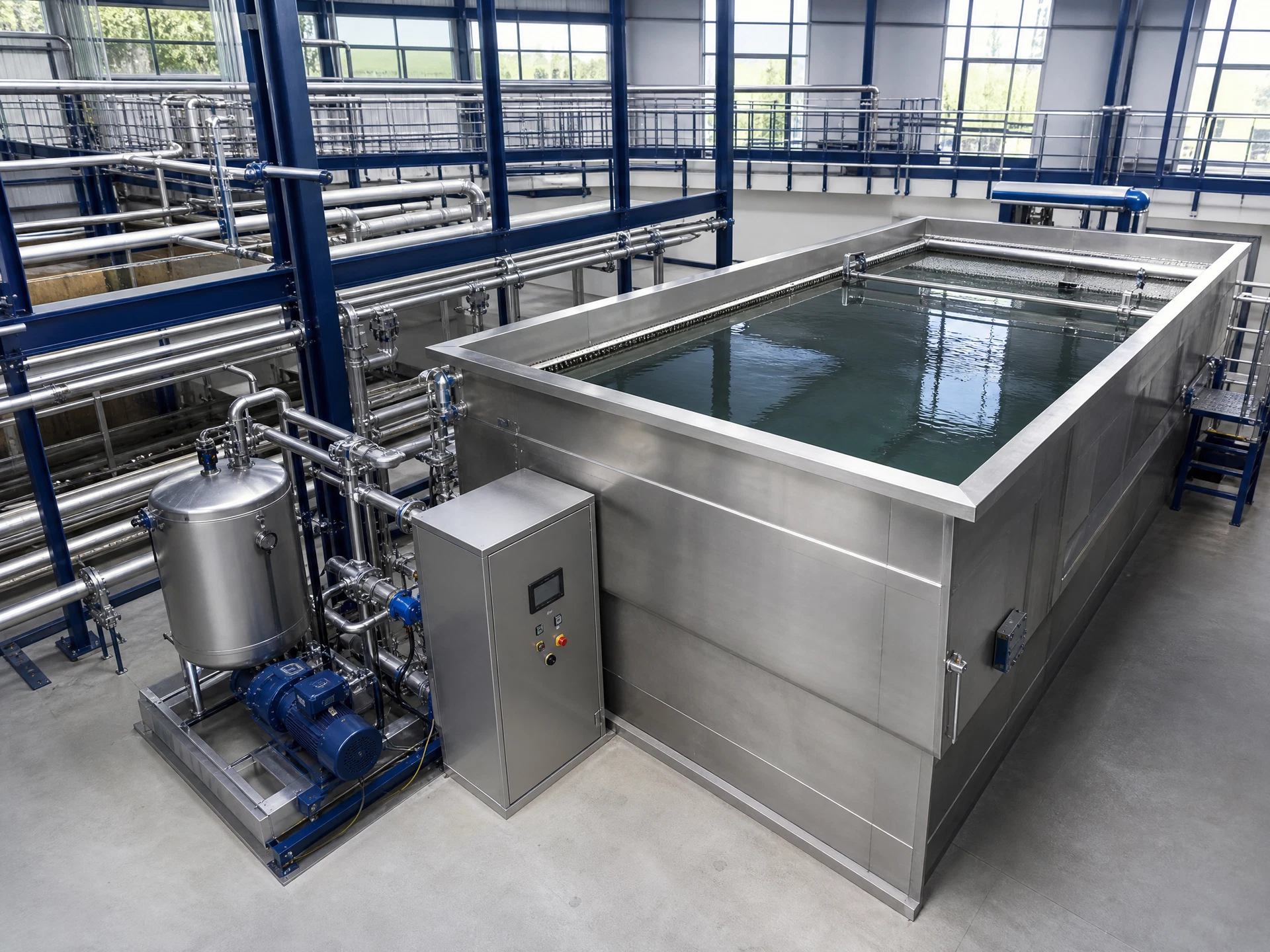
Mechanical screening and flow balancing can be discussed as early protective and stabilizing steps. Final equipment selection should show the actual channel or inlet condition, peak profile, debris character and the role of any equalization process rather than treating these modules as interchangeable boxes.
Treat the separated solids as a parallel process line
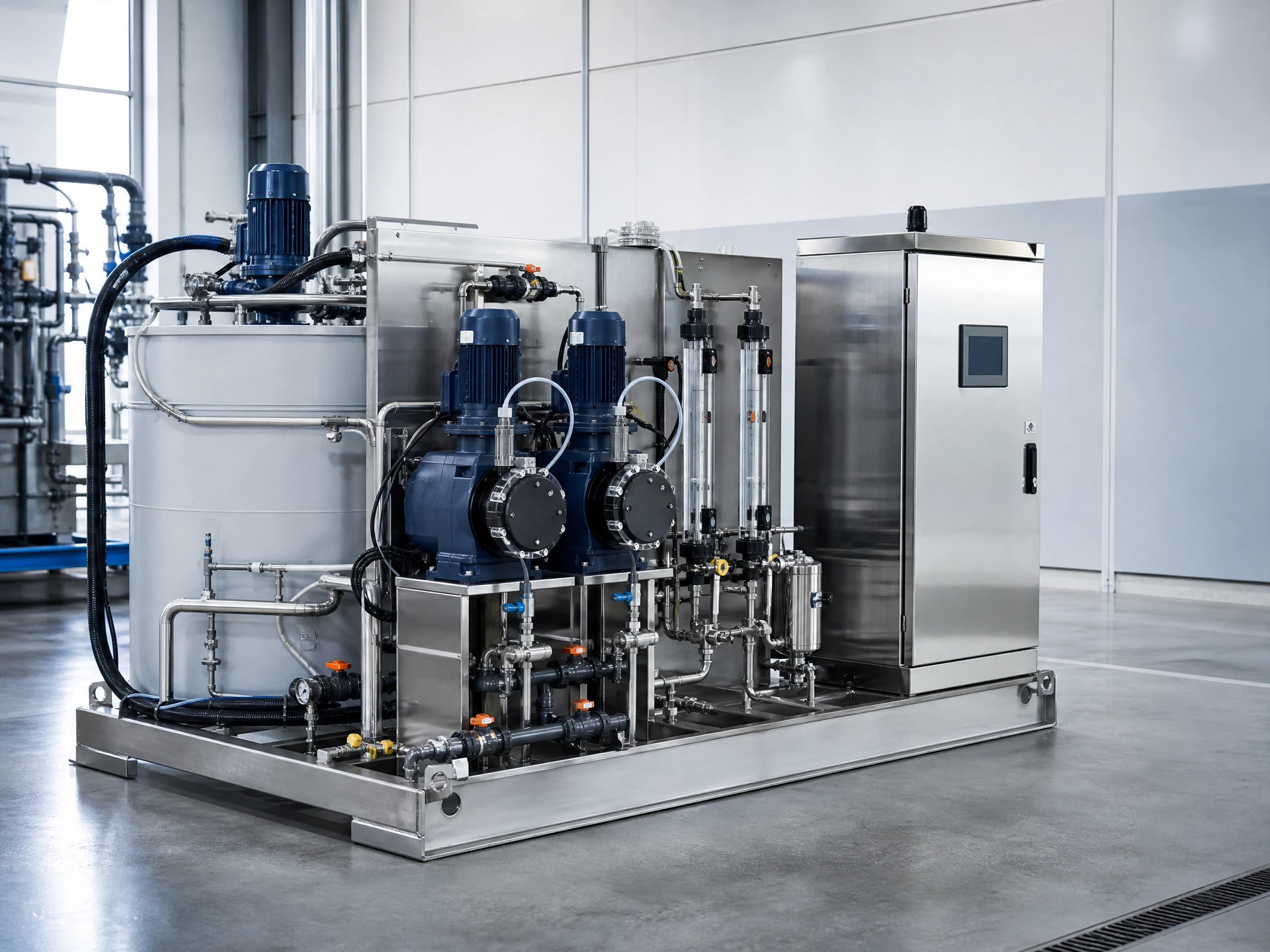
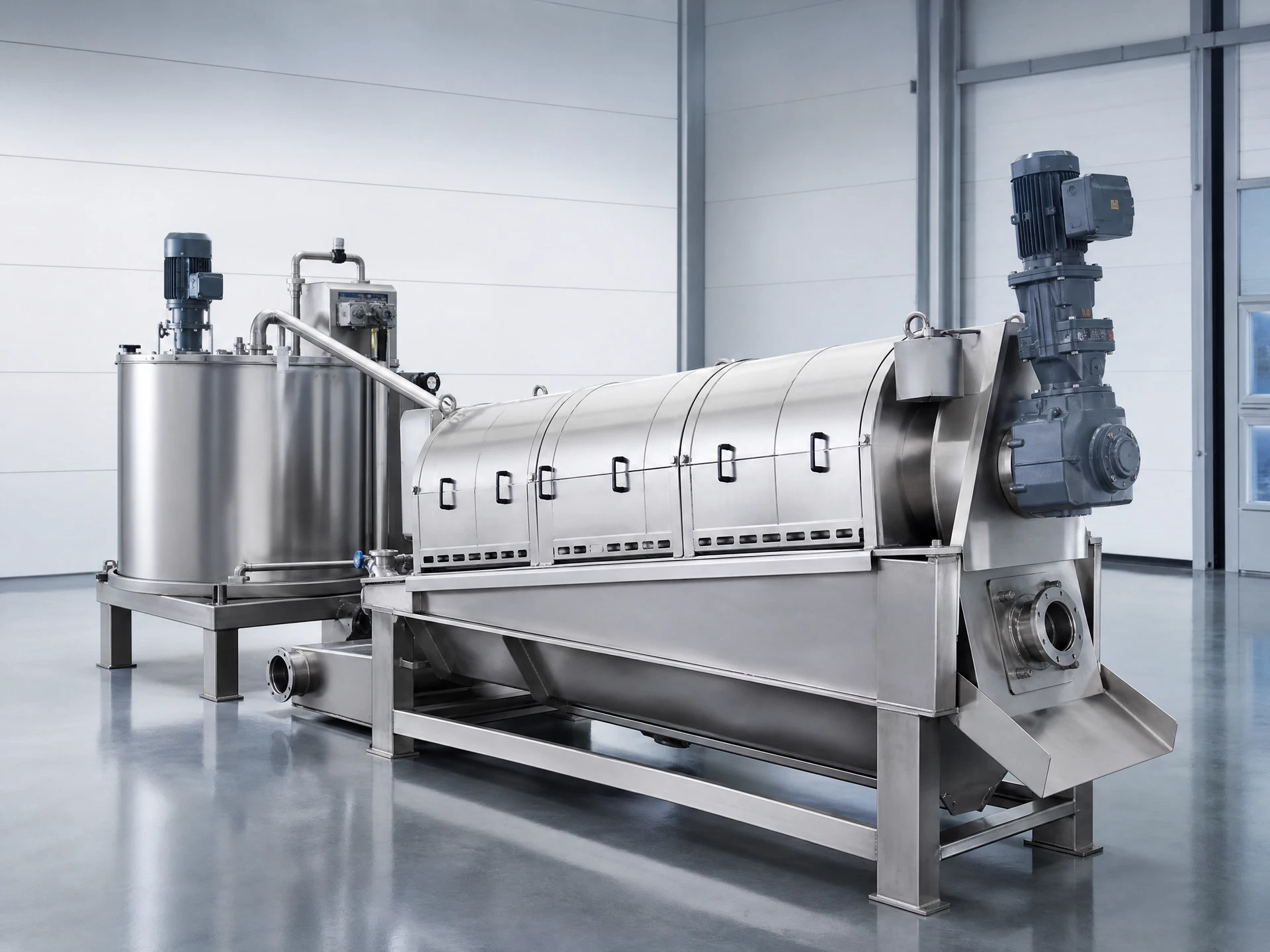
Where chemical conditioning and flotation are considered, the float sludge route should be designed with the water line. Collection, conditioning, dewatering and contained transfer each need a clear hand-off so the process package can be reviewed as one operating system.
Convert the architecture into a project-ready RFQ
An RFQ should state production schedule, wash-down periods, known oil or solids observations, target outcome, available footprint, utilities and the intended route for separated solids. Site drawings and sample information can identify the remaining questions without forcing unsupported assumptions.