This article supports early engineering scoping. It is not a performance promise or a substitute for wastewater characterization, final drawings, selected materials or an agreed technical proposal.
Start with the operating question behind mechanical bar screen selection
A channel-mounted screen must be selected around the civil and hydraulic situation as well as the debris it will intercept. Good early data prevents a mechanical choice from becoming a channel problem later. A useful engineering discussion starts by stating what is known, what is variable and what final outcome the project team is trying to protect. This avoids selecting a catalogue family from a short keyword alone. The relevant equipment should sit in a defined process line with visible upstream and downstream responsibilities, rather than being evaluated as an isolated machine.
Build the review around evidence, not a nominal label
For this topic, the project record should include average and peak flow, channel width and depth, water level range, desired opening, screen angle, allowable headloss, debris pattern, access route and corrosive environment. The quality of those inputs matters more than the length of an enquiry because equipment size, controls, materials and interface detail should follow the actual duty. Where measurements are incomplete, the RFQ should say so directly and identify the planned sampling, site survey or technical clarification. This preserves a credible path from early discussion to an agreed design basis.
Make interfaces part of the technical scope
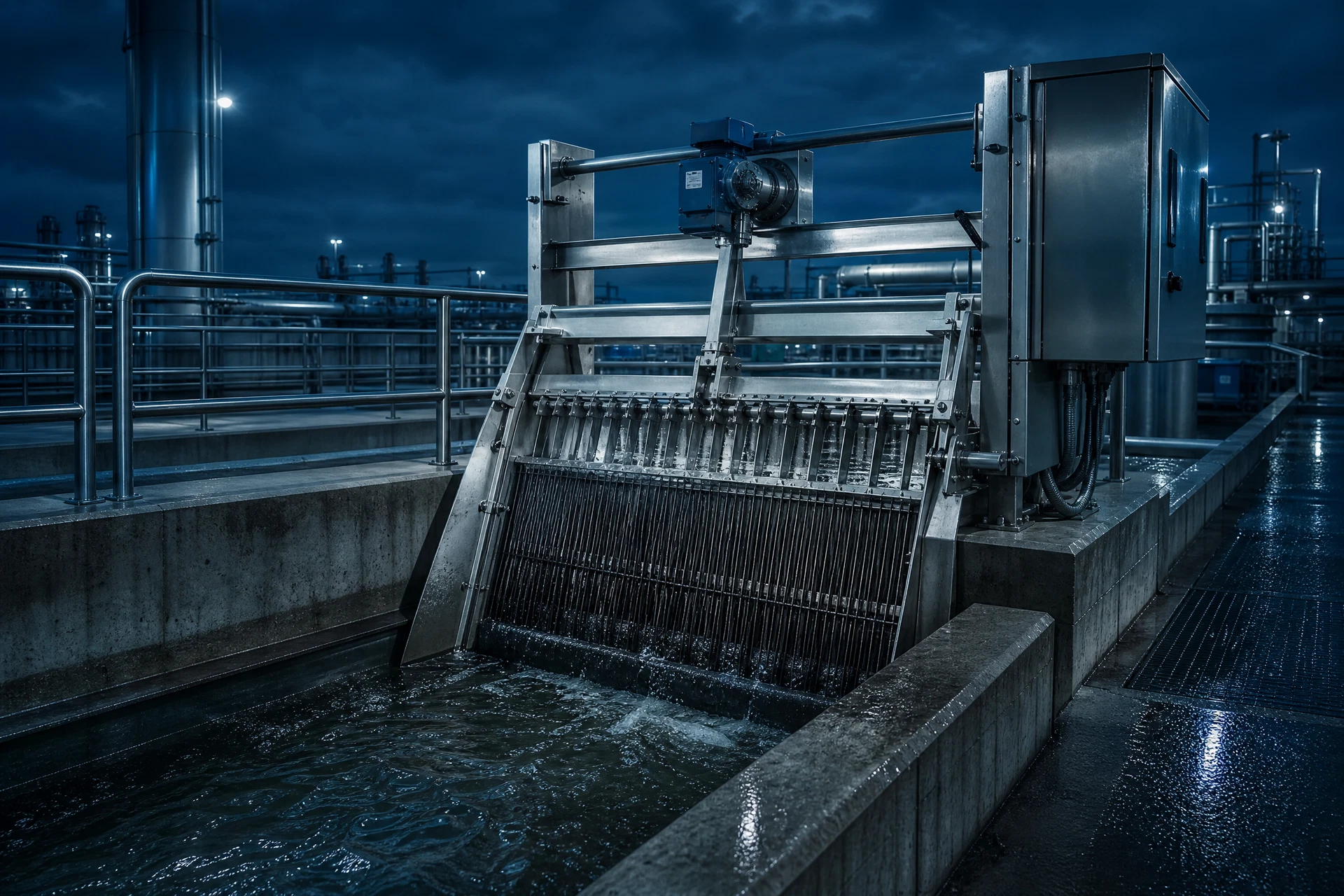
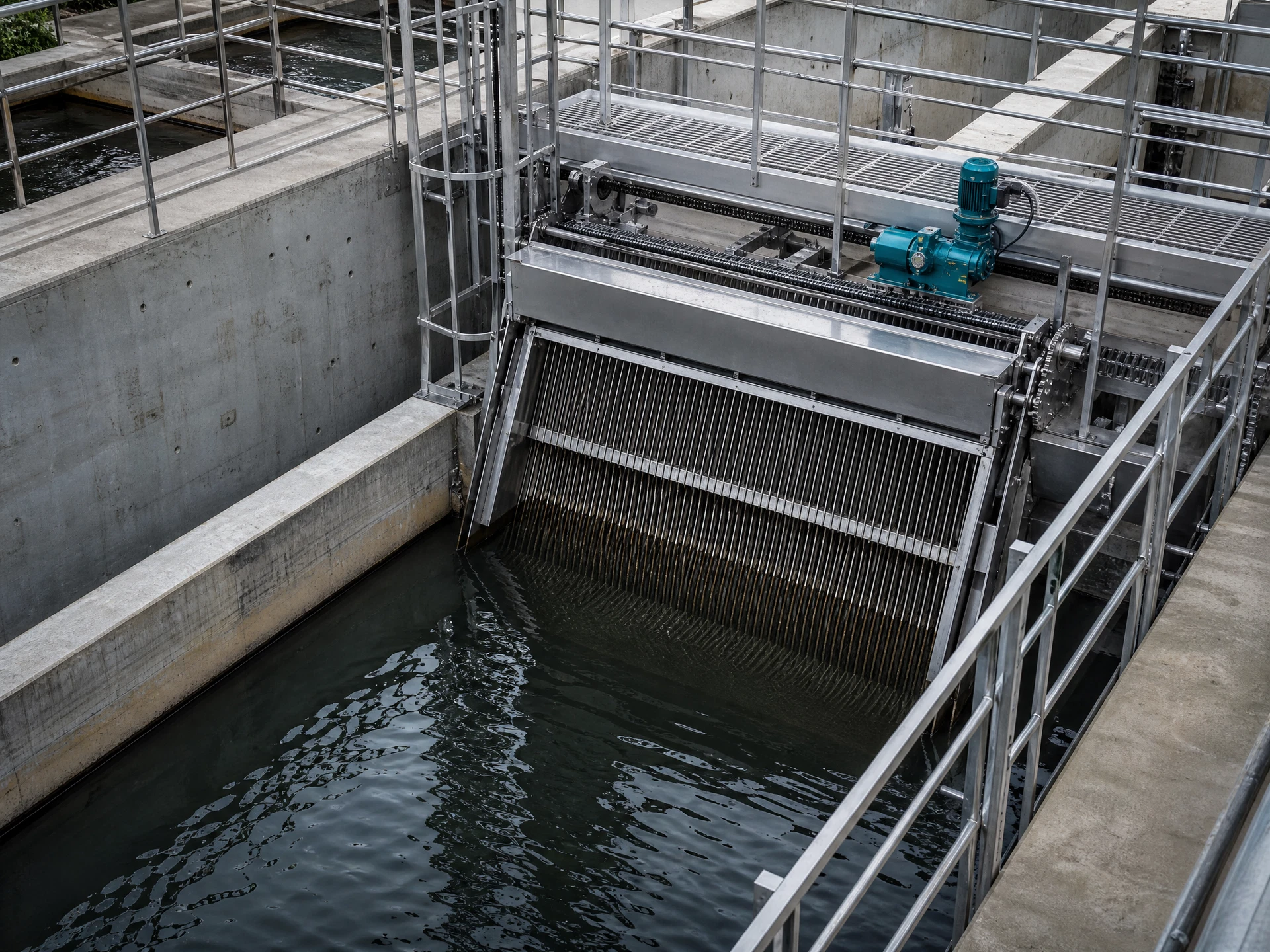
The final arrangement should show manual bypass, equipment supports, rake discharge, receiving point or conveyor, cleaning access and electrical control interface. These hand-offs influence access, containment, drainage, controls and the operational response to a stopped downstream machine. They should appear in the layout, I/O list and scope boundary rather than being left to assumption between suppliers. A complete arrangement identifies who supplies each transition, what signal permits the next step and how material is handled during normal operation and upset conditions.
Use selection logic that can be checked later
A responsible selection for a mechanical bar screen records the operating basis, peak and average duty, expected run hours, physical constraints, utility availability, material-contact needs and requested automation level. It also separates catalogue reference information from site-specific commitments. This gives a purchasing team a way to compare proposals on the same basis and prevents a broad product range from being mistaken for a guaranteed outcome.
Plan operation, cleaning and maintenance before ordering
The daily operating arrangement is a design topic, not a post-delivery detail. Review access for inspection, wash-down or cleaning, lifting and removal routes, isolation points, ordinary wear parts, local alarms and the method for observing changes in feed, solids or water quality. Operators should be able to understand the state of the equipment without relying on an unsupported generic service interval. A visible maintenance route supports safer commissioning and more stable long-term use.
Common assumptions that should be avoided
Avoid inferring final screen capacity from a naming example without the channel hydraulic and blockage assumptions that govern the installation. The final technical proposal should instead state the known feed conditions, remaining design questions, expected interfaces and the validation approach. This does not make the proposal less commercial; it makes it easier for both parties to understand what the equipment is being asked to do and what remains subject to project confirmation.
Turn the topic into a useful RFQ
A structured RFQ should bring together the country, industry, process flow, relevant water or solids characteristics, target outcome, operating profile, available utilities and layout constraints. Attach a simple process sketch or general arrangement if one exists. The objective is not to create unnecessary paperwork. It is to provide enough context for a technical conversation about the mechanical bar screen, linked equipment and the final scope of supply.
Discuss your project basis